Designing Living Rooms With Large Chandeliers
Selecting the right chandelier is one of the most impactful design decisions in a luxury interior. In a living room—where scale, light, and atmosphere must work in harmony—large chandeliers do far more than provide illumination. They define proportion, establish mood, and serve as a focal point that anchors the entire space.
For designers, builders, homeowners, and showroom partners alike, the challenge isn’t simply choosing something beautiful—it’s choosing a fixture that feels intentional, architectural, and enduring. The most successful large chandeliers for living rooms balance material authenticity, thoughtful scale, and refined light quality to elevate the space as a whole.
Below, we outline the core principles professionals rely on when specifying statement chandeliers—and how to apply them with confidence.
Start With Material Integrity and Craft
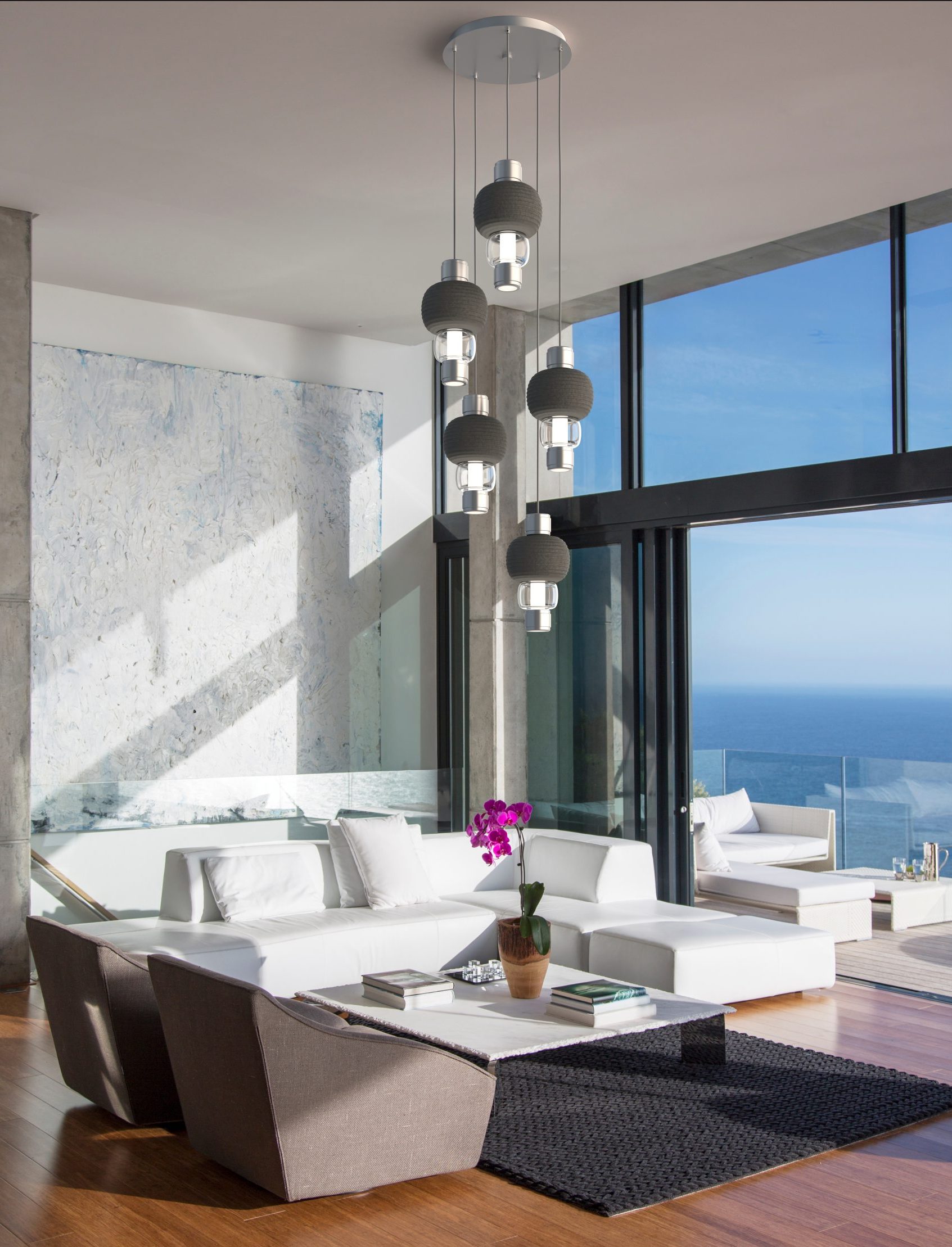
The difference between a decorative fixture and a lasting design statement lies in material honesty and craftsmanship. Handcrafted chandeliers—especially those incorporating glass and metalwork—carry depth, texture, and individuality that mass-produced lighting simply cannot replicate.
A large crystal chandelier, when thoughtfully designed, offers far more than sparkle. Hand-formed crystal or glass introduces movement, refraction, and softness, responding dynamically to both natural and artificial light. Subtle variations in form and finish create visual richness that evolves throughout the day, making the chandelier feel alive within the space.
For coastal or light-filled interiors, look for glass with translucency rather than excessive polish. Organic forms, nuanced textures, and restrained detailing allow the fixture to complement its surroundings rather than overpower them.
Let Scale Do the Heavy Lifting
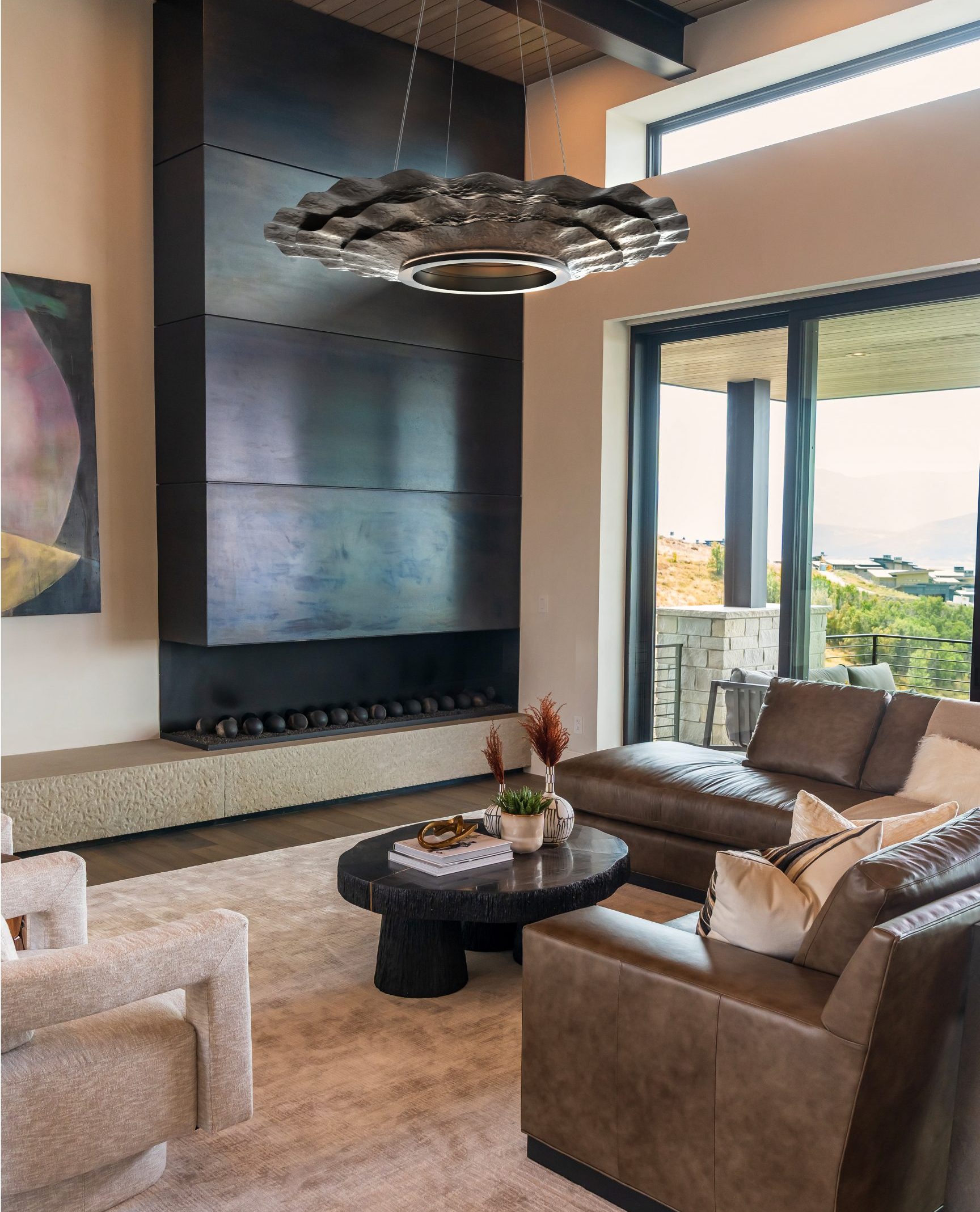
Scale is the single most important factor when selecting a chandelier for a living room—especially in open-concept homes or spaces with tall ceilings. A fixture that is too small feels incidental; one that is too large without intention feels overwhelming.
Professionals often size large chandeliers by adding the room’s length and width (in feet) and converting that number to inches to determine an ideal diameter. This provides a reliable starting point, but ceiling height and architectural volume should guide final decisions.
In living rooms with vaulted or double-height ceilings, chandeliers should visually connect the upper and lower planes of the space—drawing the eye upward while maintaining balance at eye level. The goal is presence without obstruction, drama without distraction.
Use Form to Shape the Room
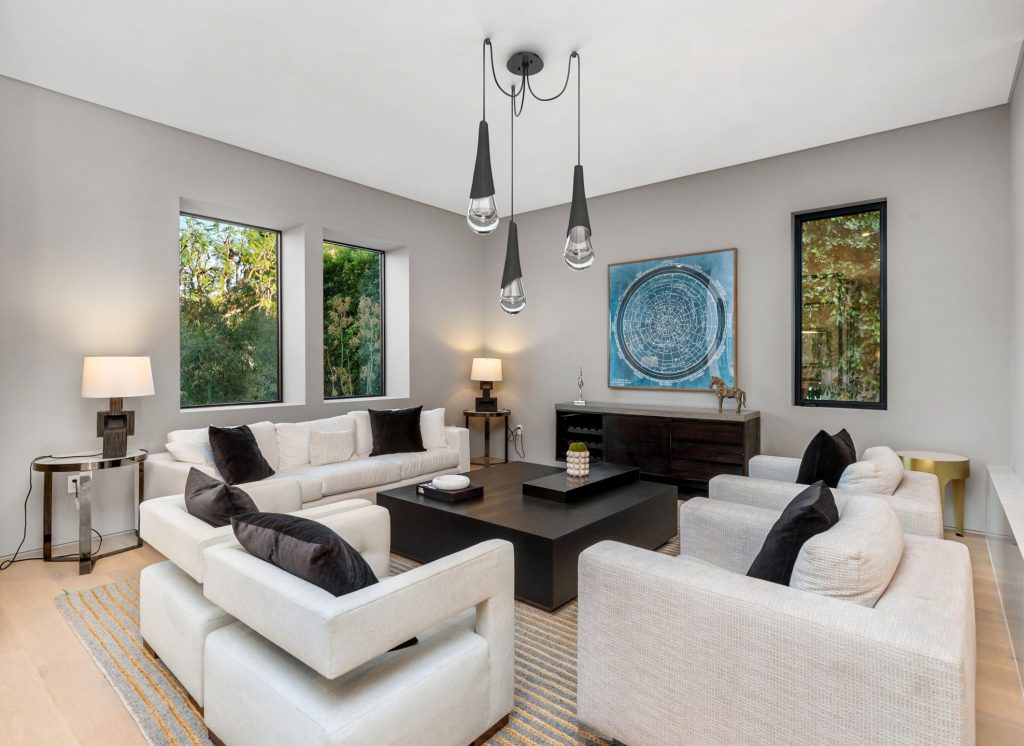
The silhouette of a chandelier plays a powerful role in how a space feels. Clean, geometric forms introduce structure and modernity, while more fluid or radial compositions create softness and movement.
In contemporary living rooms, sculptural chandeliers with intentional geometry act as architectural elements—bringing rhythm and clarity to large volumes. In more organic interiors, layered or cascading forms echo natural movement and add visual warmth.
The most successful large chandeliers for living rooms don’t compete with architecture; they reinforce it, enhancing sightlines and spatial flow.
Balance Metals for Depth and Longevity
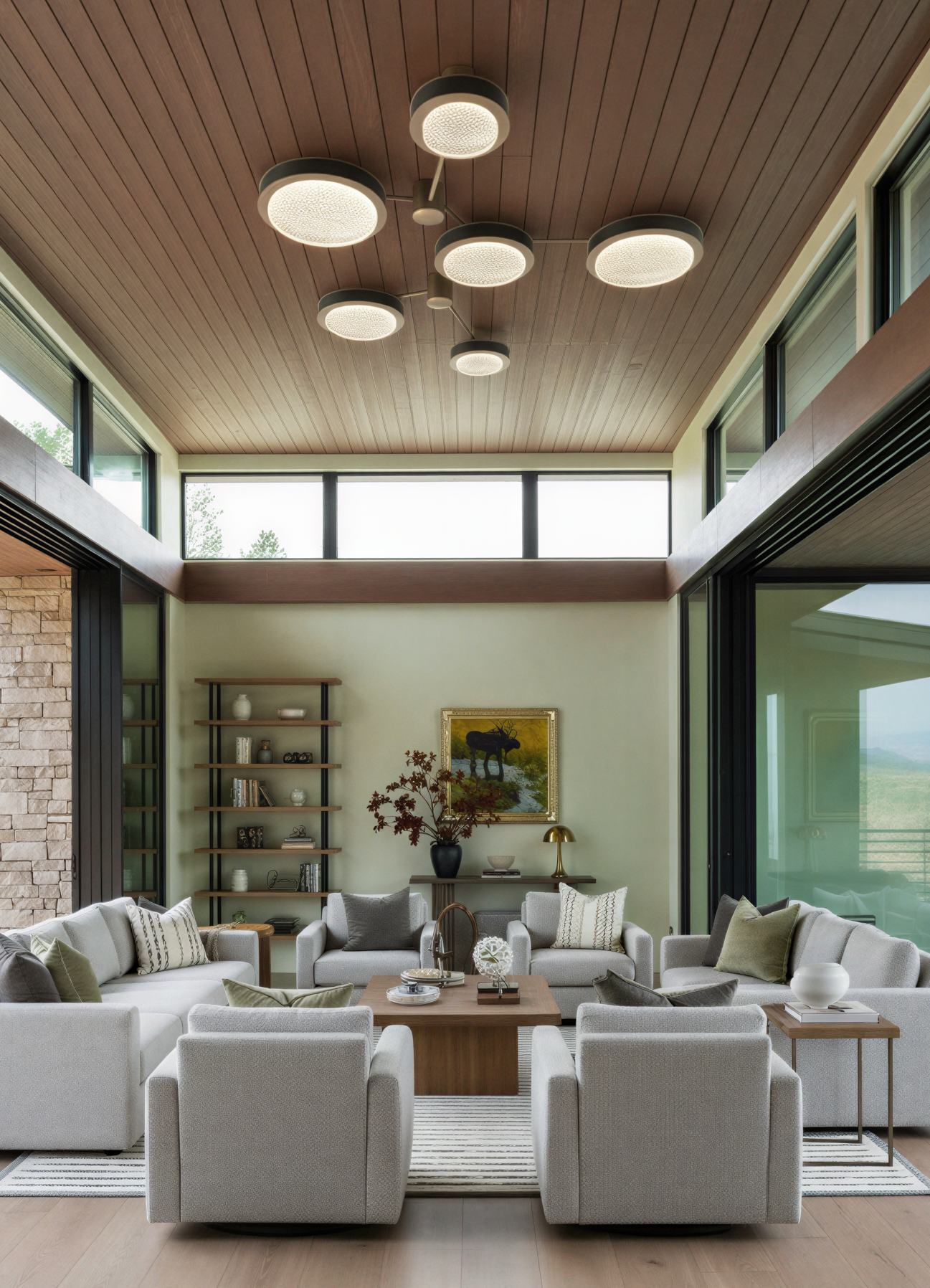
Mixed metals are no longer a trend—they’re a design standard. Thoughtfully combining finishes introduces dimension and ensures a chandelier remains versatile across evolving interiors.
Rather than matching every finish in the room, aim for harmony. One dominant metal can establish cohesion, while secondary finishes add contrast and nuance. Warm and cool tones layered together often feel more collected and less prescriptive.
For builders and designers, this approach also future-proofs a space, allowing furnishings and finishes to change without requiring new lighting specifications.
Prioritize Light Quality, Not Just Output

A chandelier’s job isn’t simply to illuminate a room—it’s to shape the atmosphere within it. Living rooms benefit from soft, ambient illumination that enhances comfort while supporting layered lighting plans.
Large chandeliers with diffused or refractive materials provide glow rather than glare, creating depth and warmth without harsh shadows. When paired with dimming, the fixture can transition effortlessly from daytime brightness to evening intimacy.
This is where craftsmanship matters most: well-designed glass and crystal distribute light evenly, allowing even a bold large crystal chandelier to feel inviting rather than overwhelming.
Design With the Entire Room in Mind
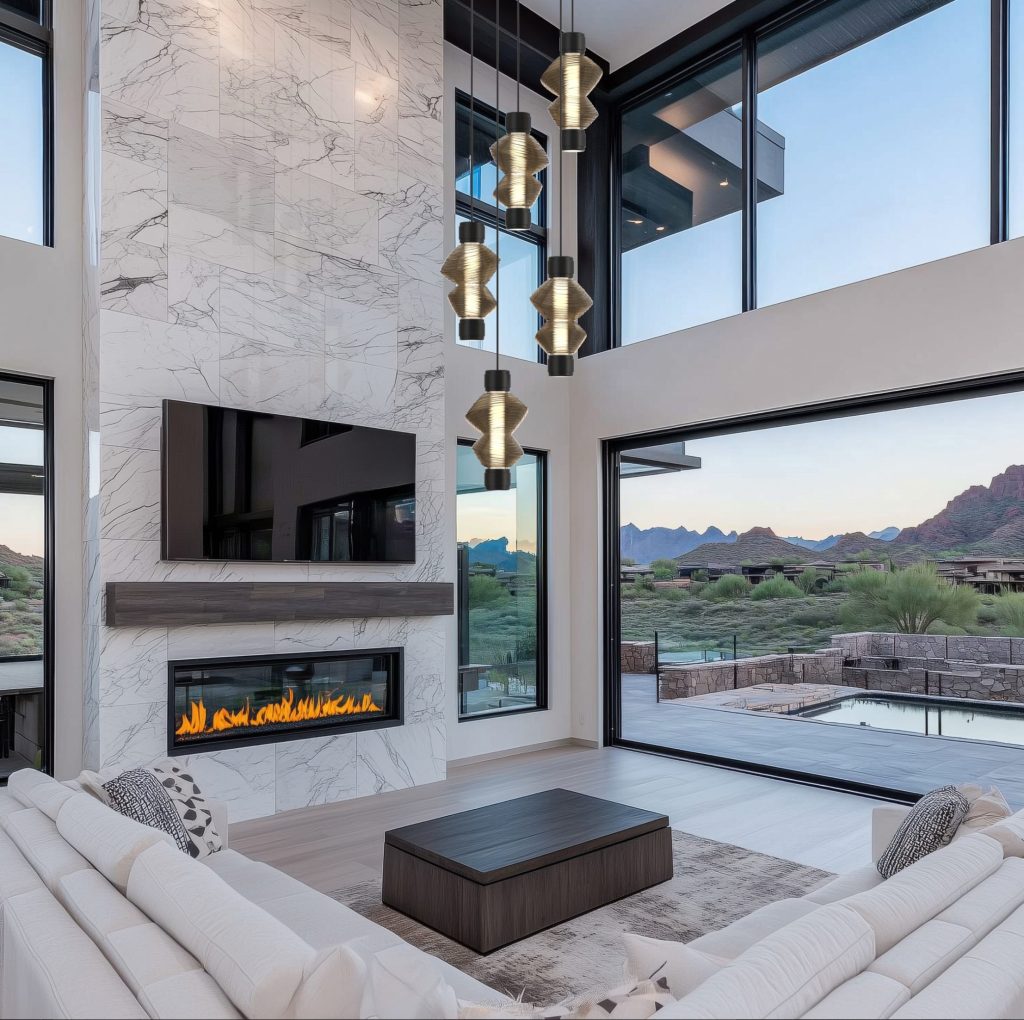
The most successful chandelier installations feel inevitable—as though the fixture was always meant to be there. This comes from thoughtful coordination with surrounding elements: ceiling height, architectural lines, furniture scale, and material palette.
Rather than treating lighting as an afterthought, professionals integrate chandeliers early in the design process. This ensures proper placement, ideal hanging height, and seamless alignment with the room’s visual language.
For showrooms and dealers, this holistic approach helps clients visualize how a statement chandelier will function within a complete interior—not just as a standalone object.
Elevating Living Rooms With Purposeful Chandeliers
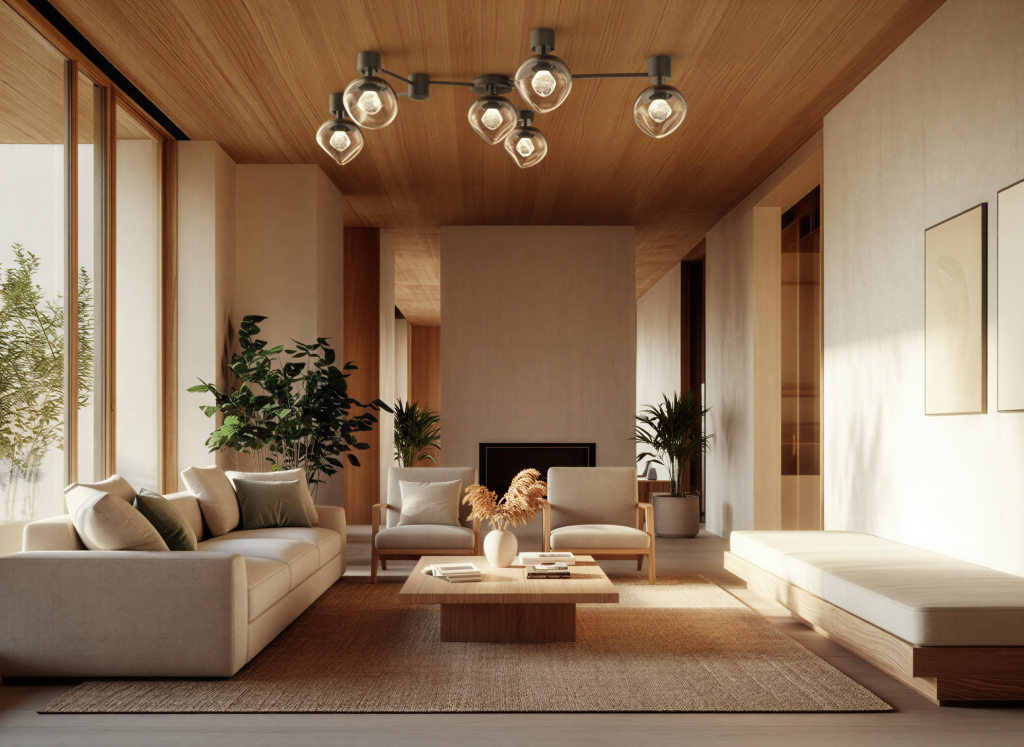
A well-chosen chandelier transforms a living room from a collection of furnishings into a cohesive, intentional space. Through considered scale, authentic materials, and refined light quality, large chandeliers become architectural anchors—defining how a room is experienced as much as how it looks.
At Hammerton, every chandelier is designed through a material-first lens, honoring handcrafted glass and metalwork while offering the flexibility designers and builders need. From sculptural forms to expansive, custom-scaled installations, our lighting is created to live comfortably within exceptional interiors.
Explore our collections to discover large chandeliers for living rooms that balance artistry, performance, and longevity—crafted to elevate spaces for decades to come.
Frequently Asked Questions
How large should a chandelier be for a living room?
The ideal size depends on room dimensions and ceiling height. A common guideline is to add the room’s length and width (in feet) and convert that total to inches for the chandelier’s diameter. Adjust based on ceiling height and architectural volume.
Are large crystal chandeliers suitable for modern homes?
Yes—when designed with restraint. Handcrafted crystal or glass with clean forms and thoughtful scale can feel distinctly modern while still offering warmth and visual interest.
Can large chandeliers work in open-concept spaces?
Absolutely. In open layouts, chandeliers help define zones and provide visual structure. The key is selecting a fixture with enough presence to anchor the space without interrupting flow.
Should chandelier finishes match other metals in the room?
They should coordinate, not necessarily match. A dominant finish paired with subtle secondary tones creates depth and allows the space to evolve over time.
ARE YOU A TRADE PROFESSIONAL?
At Hammerton, we know what it takes to deliver exceptional design on tight timelines. Our Trade Account Program offers exclusive discounts, product access, and dedicated support to help you stay ahead.
APPLY NOW and simplify your workflow from concept to completion.