Handcrafted Lighting vs Factory: The Difference You Can See
What “Handcrafted” Actually Means
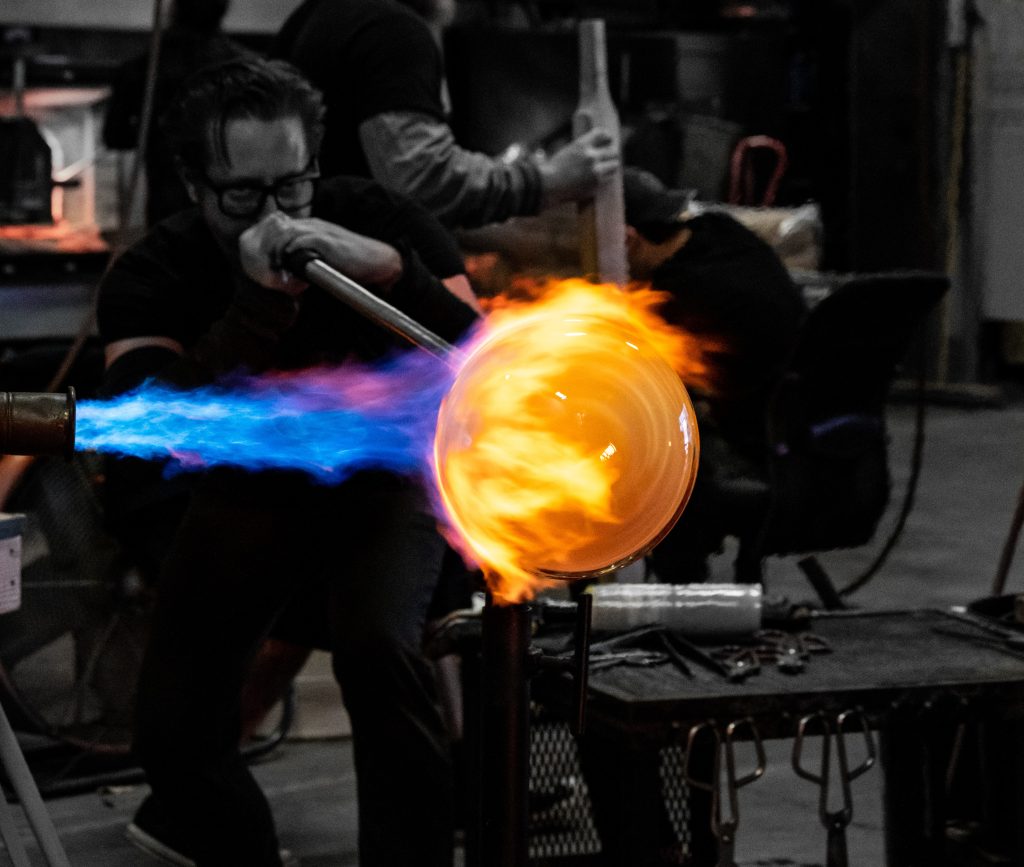
The word gets used loosely. But handcrafted lighting has a specific meaning: each fixture passes through the hands of skilled artisans who shape, finish, and quality-check the pieces individually. At Hammerton, that means hand-blown glass formed breath by breath, metalwork forged and finished by craftspeople who have spent years developing their eye — and a standing rule that every piece must look as good up close as it does across the room.
Factory-produced lighting, by contrast, is designed for efficiency. Molds, automated finishing lines, and high-volume output keep costs low and lead times predictable. For commodity applications, that’s a reasonable trade. But it also means every fixture is identical in a way that reveals itself in a space — because uniformity, at scale, starts to look like uniformity.
“A handcrafted fixture doesn’t just illuminate a room. It gives the room a story — and stories are what clients remember long after the project is complete.”
Custom Lighting vs. Stock: Pros & Cons for Designers
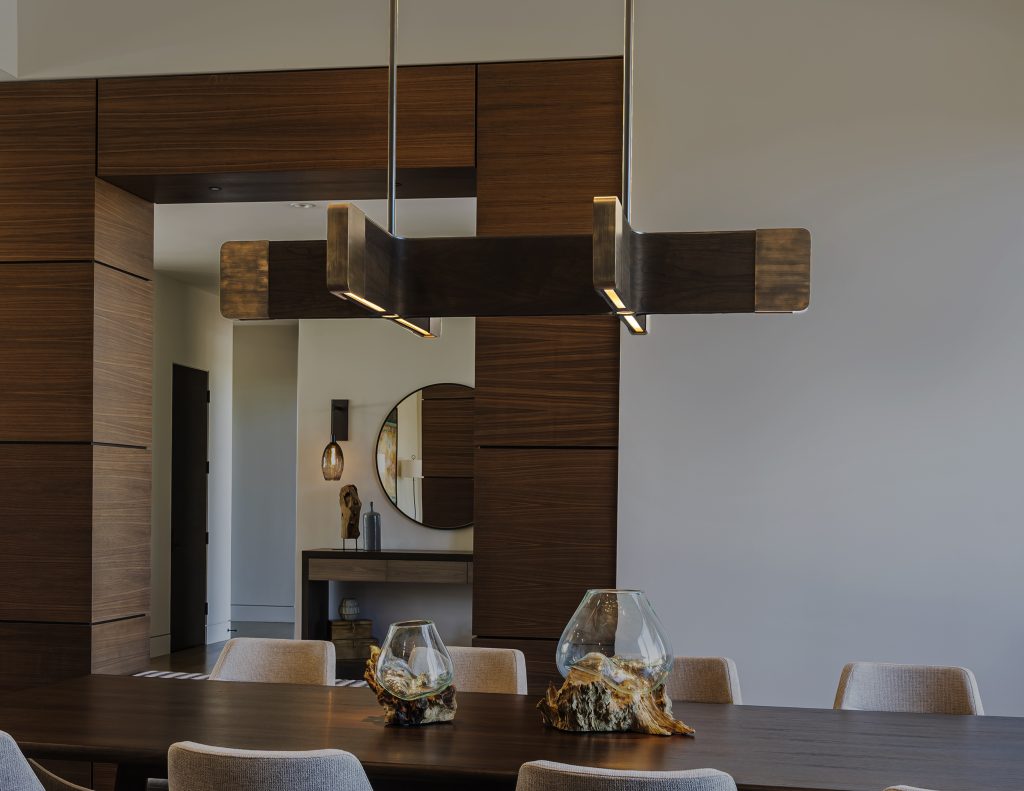
This is the practical conversation. When a client asks why a custom fixture costs more, or why lead time is longer, you need language that connects the investment to the outcome. Here’s how we think about it:
| Consideration: | Stock / Factory Lighting: | Custom / Handcrafted Lighting: |
|---|---|---|
| Availability | Often in-stock; fast ship times | Built to order; plan for lead time |
| Differentiation | Widely available; risk of repetition across projects | Exclusive to your specification; won’t appear in every showroom |
| Scale & Proportion | Fixed sizes — may require compromise | Sized to the architecture and the space |
| Finish & Detail | Standardized finishes; limited variation | Artisan-applied finishes with natural, intentional variation |
| Longevity | Designed for market cycles | Built to last; materials and construction support long-term ownership |
| Client Experience | Transactional | Collaborative; clients feel ownership in the outcome |
| Investment | Lower upfront cost | Higher cost, offset by value, exclusivity, and durability |
For designers, the most important column is differentiation. When a fixture can be found in three competing showrooms, it becomes a price conversation. When it’s been specified to the exact scale, finish, and glass treatment of a particular space, it becomes part of your design authorship — and that has real professional value.
Why Luxury Lighting Is an Investment, Not a Line Item
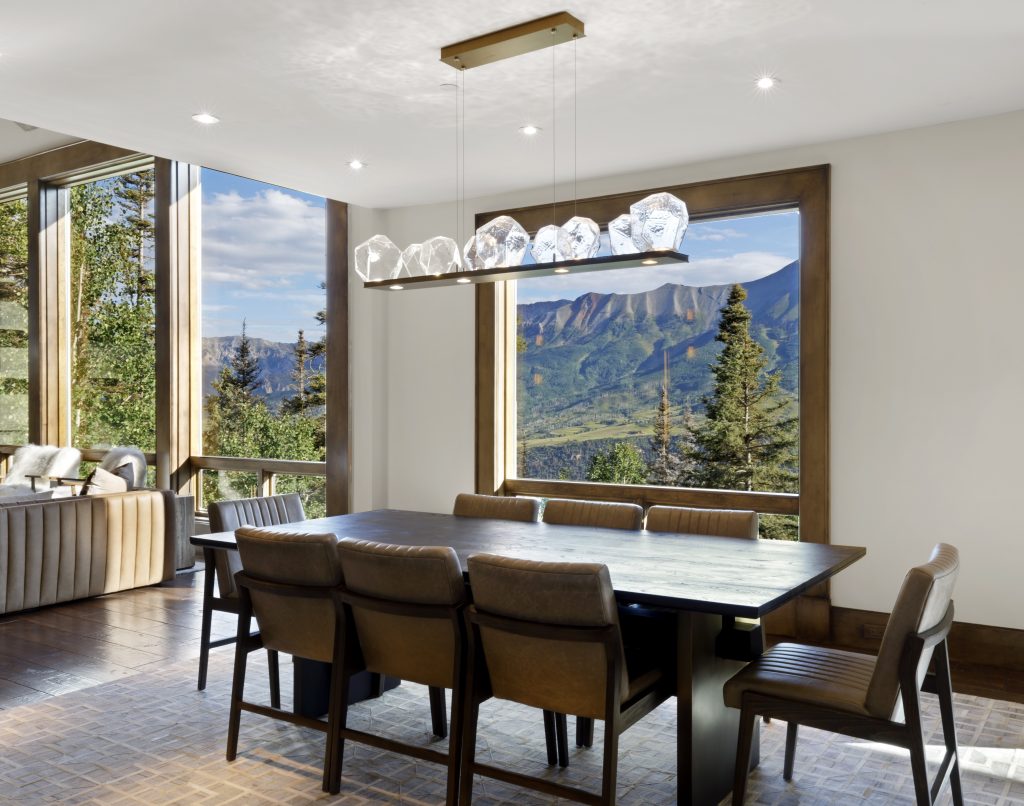
Homeowners often ask where to allocate budget in a high-end build or renovation. Our answer is consistent: luxury lighting returns more per dollar than almost any other specification. It’s one of the few elements that reads at every scale — from across the room to the moment a guest reaches up and feels the weight of a hand-forged frame.
That tactile quality matters. Builders working on custom homes understand this intuitively. A house can have extraordinary surfaces, exquisite millwork, and imported stone — and still feel unresolved if the lighting is generic. Conversely, a well-chosen handcrafted fixture can anchor a room and elevate everything around it.
This is what our founders understood when Hammerton began in 1995: that lighting isn’t decoration. It’s the element that determines whether a space has presence — the quality that makes a room feel considered, alive, and worth coming back to.
The Right Fixture for the Right Project
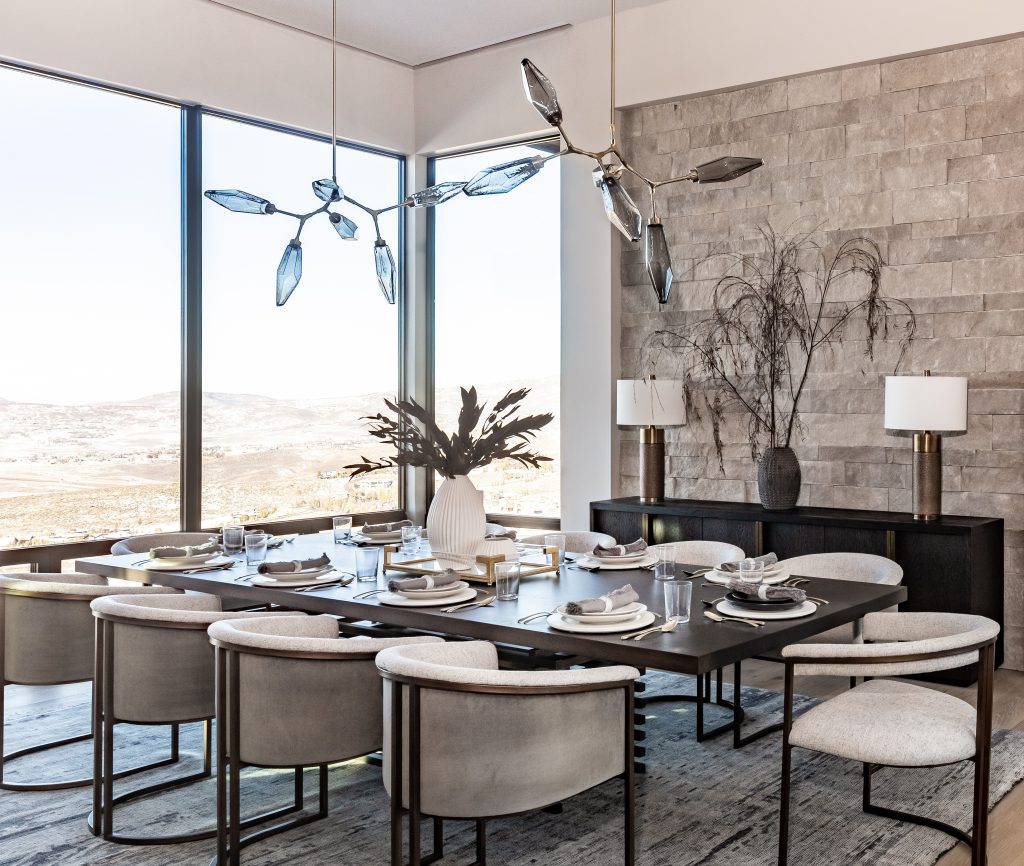
We’re not here to argue that every project demands a custom, handmade fixture. There are thoughtful, well-made stock pieces that belong in the right application. But if you’re designing, building, or furnishing a space where the details are meant to be noticed — a residential great room, a hotel lobby, a statement dining room — then the question of how a fixture was made is the same as the question of how the room will be remembered.
Handcrafted lighting asks something of the person making it. That attention transfers. And it’s visible in the finished space in ways that are hard to quantify but impossible to ignore.
Ready to specify lighting that’s as considered as the rest of your design?
aRE YOU A TRADE PROFESSIONAL?

At Hammerton, we know what it takes to deliver exceptional design on tight timelines. Our Trade Account Program offers exclusive discounts, product access, and dedicated support to help you stay ahead. Apply now and simplify your workflow from concept to completion.
faq:
What is handcrafted lighting and how is it different from factory-made? Handcrafted lighting is made by skilled artisans who shape, finish, and inspect each fixture individually — using techniques like hand-blown glass and hand-forged metalwork. Factory-made lighting is produced at scale using molds and automated finishing, prioritizing consistency and volume over character and craft.
Is custom lighting worth the higher cost? For spaces where details matter, yes. Custom lighting is sized to your architecture, finished to your specification, and built to last beyond market cycles. It also protects your design from repetition — a stock fixture can appear in dozens of other projects; a custom piece belongs to yours alone.
What are the pros and cons of custom lighting vs. stock lighting for designers? Custom lighting offers exclusivity, precise proportions, and artisan finishes — but requires longer lead times and a higher investment. Stock lighting ships faster and costs less upfront, but limits differentiation and locks you into standard sizes and finishes. For signature spaces, custom nearly always wins.
How does luxury lighting impact a home’s overall design? Luxury lighting anchors a room in a way few other elements can. It reads at every scale — from across a great room to the moment someone notices the weight of a hand-forged frame up close. In high-end builds, it’s often the detail that determines whether a space feels resolved or unfinished.
Can handcrafted lighting be customized to fit my specific space? Yes — and that’s precisely the point. Handcrafted fixtures can be scaled to your ceiling height, specified in custom finishes, and designed to complement the materials already in your space. That level of precision is what separates a lighting specification from a lighting decision.