Custom Spotlight: The Crossbeam
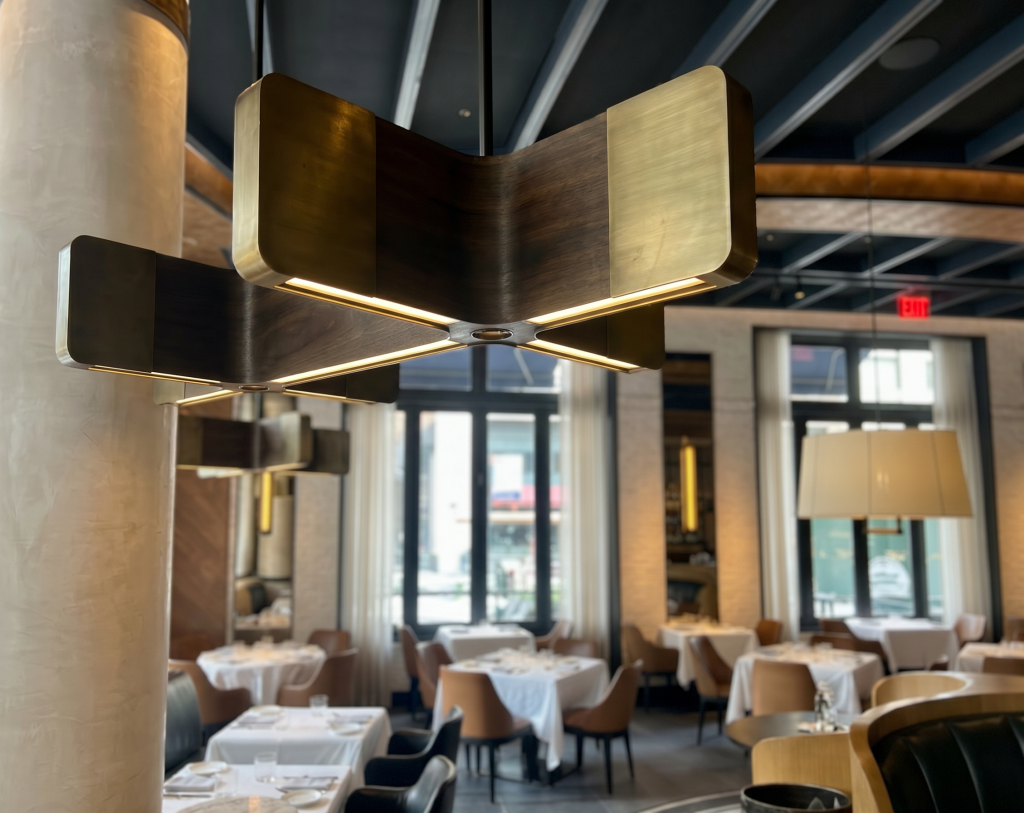
When an interior designer approached Hammerton to develop a custom fixture for an award-winning seafood restaurant in New York’s Flatiron District, she arrived with both a clear vision and a complex challenge.
The lighting needed to deliver a broad, balanced spread of illumination across the dining room while preserving the atmosphere guests expect from a fine dining experience. It also needed to complement a design narrative influenced by the Pacific, Atlantic, and Mediterranean coasts, where cuisine, travel, and craftsmanship converge.
Looking to the refined mix of wood, metal, and tailored detailing found in catamaran construction, Hammerton’s design team began exploring a form that could feel both architectural and fluid. One of the project’s unique challenges was creating a singular hero fixture that could be repeated throughout the restaurant, helping unify multiple dining areas while maintaining a cohesive design language. The fixture needed a strong visual presence without overwhelming the space, delivering broad illumination while preserving a sense of openness and lightness.
The result was the Crossbeam—a custom fixture brought to life through close collaboration between the interior designer and Hammerton’s artisans, engineers, and design team.
Starting with Structure
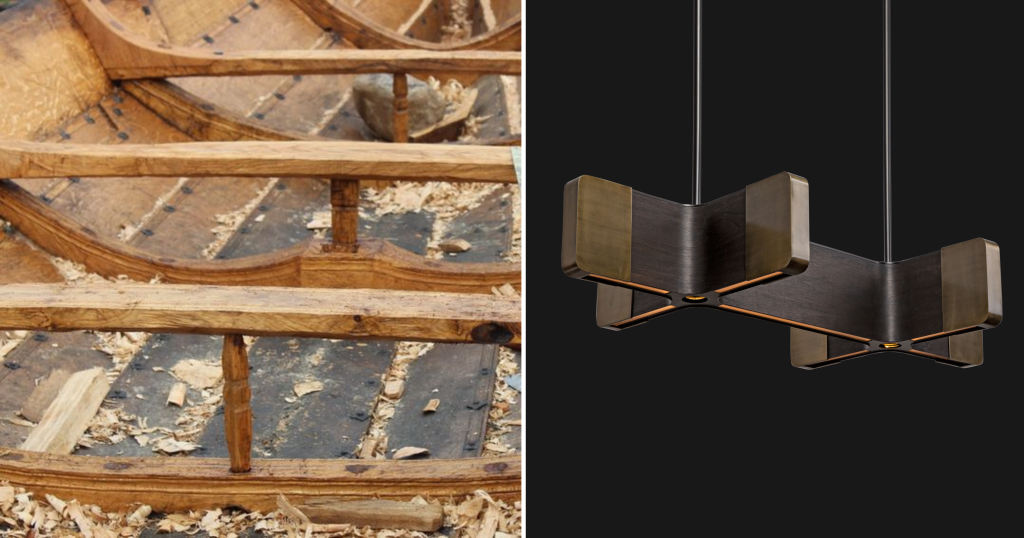
From the beginning, the Crossbeam was guided by a simple structural idea.
In nautical architecture, a crossbeam is the horizontal member that connects two primary structures—most notably the twin hulls of a catamaran. While largely functional, these beams are essential to the vessel’s strength, stability, and overall performance. Rather than separating components, the crossbeam unifies them into a single cohesive system.
That concept became the foundation for the fixture’s design.
Its elongated framework creates a strong visual connection across the composition, establishing architectural rhythm while maintaining a sense of openness. Like its nautical counterpart, the fixture balances strength with lightness, allowing illumination to move freely through and around the structure instead of feeling visually heavy.
As the design evolved, proportions were refined and each fin was capped with antique bronze detailing, introducing warmth and precision that elevated the structural language into something more decorative.
What emerged was not simply a lighting fixture, but a sculptural expression of connection, balance, and craftsmanship.
Material as Contrast
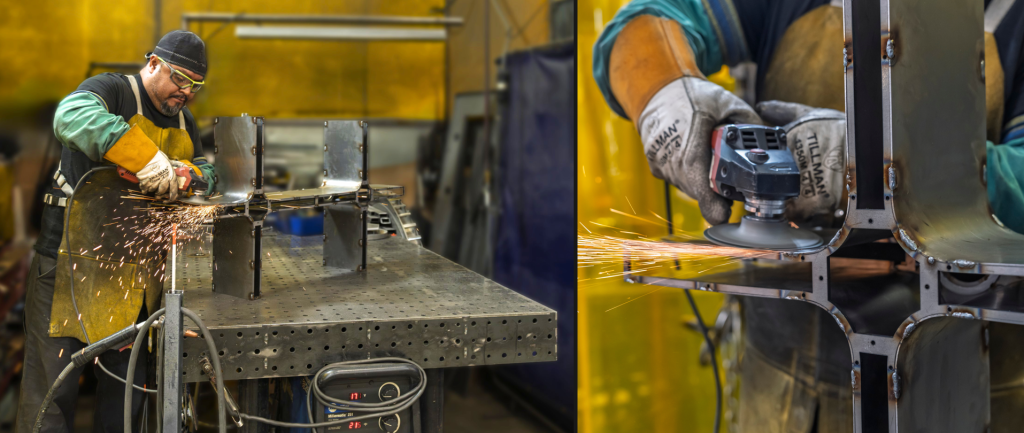
Once the form of the Crossbeam was established, attention shifted to how it would be constructed.
The fixture’s framework was fabricated from aluminum, providing the precision, strength, and lightweight performance required for repeated installation throughout the restaurant. Rather than leaving the metal exposed, the team introduced a wood veneer that was carefully applied to the structure, bringing warmth and natural character to the fixture’s architectural form.
This layered approach combines the structural advantages of metal with the richness and tactile appeal of wood. The result feels both engineered and organic—a balance that echoes the refined craftsmanship found throughout luxury yacht interiors.
Because the Crossbeam would appear repeatedly throughout the dining room, every detail had to be executed with consistency. The combination of aluminum construction, wood veneer, and antique bronze accents ensured each fixture delivered the same custom, handcrafted presence across the space.
Lighting the Experience
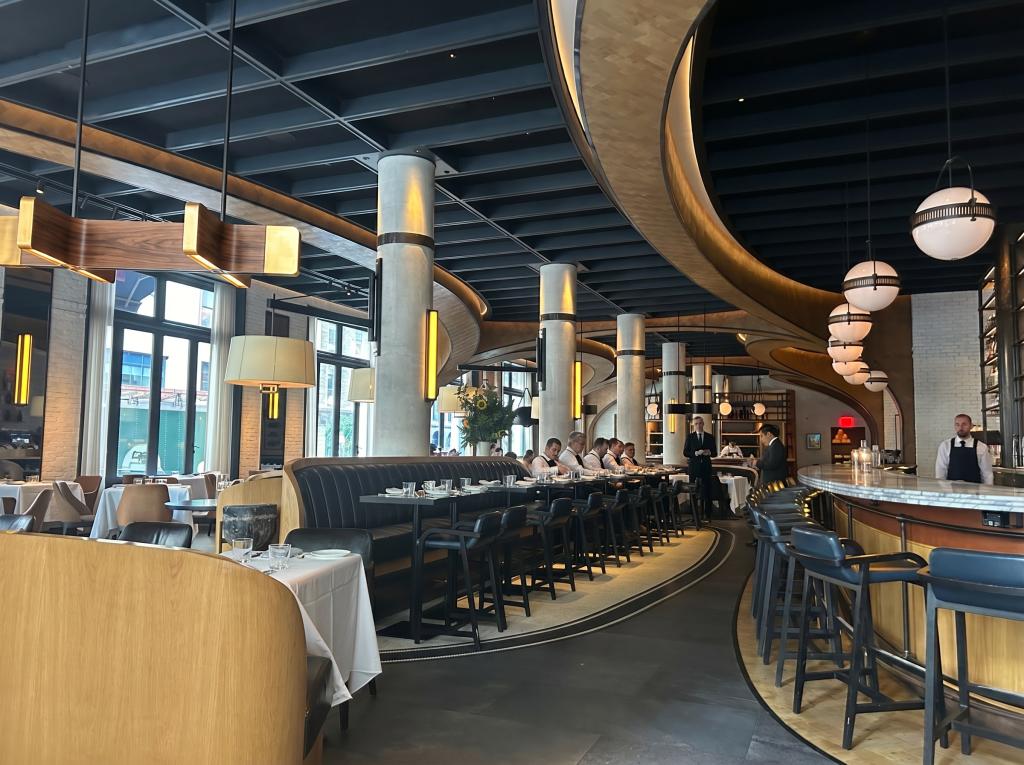
Beyond form and material, the Crossbeam was engineered to shape how the space feels during service.
The design integrates targeted downlighting to illuminate dining tables with clarity, while the open framework allows ambient light to diffuse gently into the surrounding space. This dual approach avoids harsh visual breaks, creating a continuous field of light that supports both function and atmosphere.
The result is a layered lighting experience—precise where it needs to be and soft where it matters most.
A Collaborative Evolution
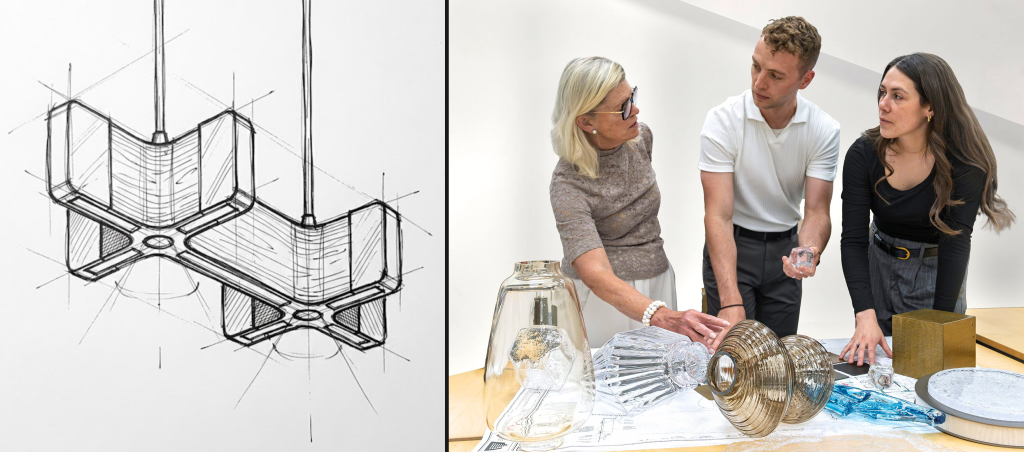
The Crossbeam was not developed in a linear motion, but through ongoing dialogue between design intent and technical refinement.
Sketches were translated into physical studies, proportions were tested, and details were adjusted in response to both aesthetic goals and performance requirements. Each iteration brought the fixture closer to a resolution that balanced architectural clarity with human comfort.
This process of exchange ultimately shaped the Crossbeam into its final form—grounded in concept, but realized through collaboration.
Beyond the Original Project
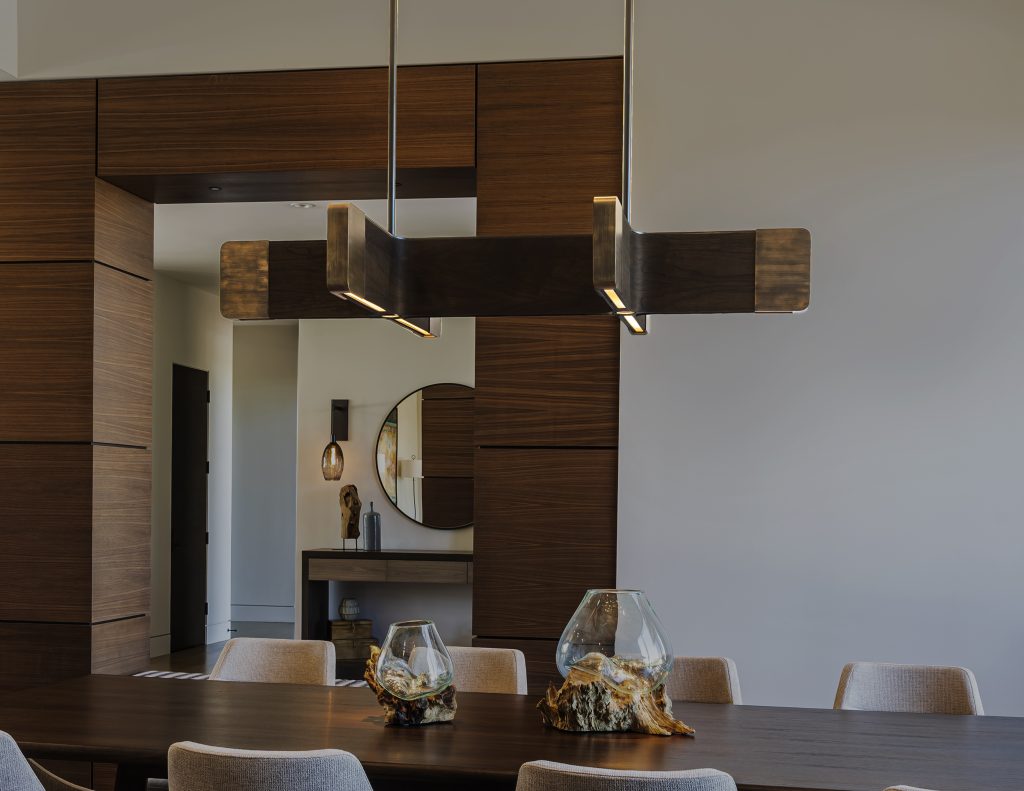
Initially conceived for a single hospitality environment, the Crossbeam has since found a broader audience.
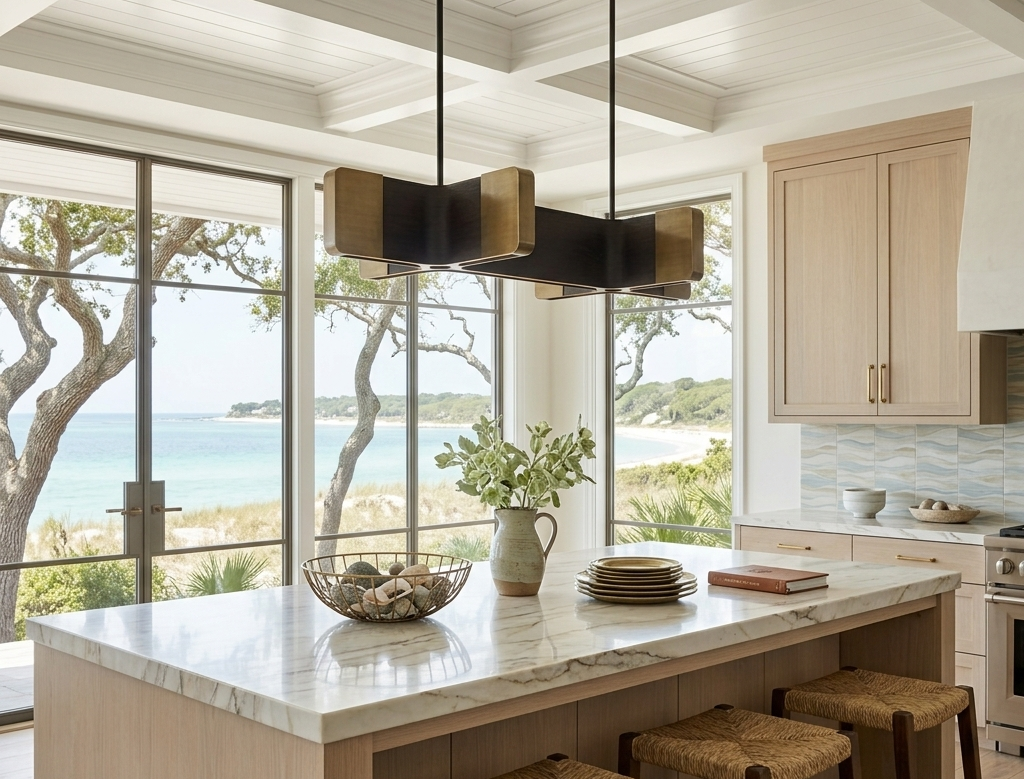
Its combination of architectural structure, material restraint, and adaptable lighting performance has led to its specification in residential projects nationwide, where designers and homeowners are drawn to its ability to function as both lighting and sculptural presence.
The Crossbeam’s evolution beyond its original setting speaks to a simple idea: when design and engineering work together, a fixture can become the element that brings an entire space together.
aRE YOU A TRADE PROFESSIONAL?
At Hammerton, we know what it takes to deliver exceptional design on tight timelines. Our Trade Account Program offers exclusive discounts, product access, and dedicated support to help you stay ahead. Apply now and simplify your workflow from concept to completion.
FAQ:
What inspired the Crossbeam fixture?
The Crossbeam was inspired by the structural elements found in luxury yacht construction. In nautical architecture, a crossbeam is the component that connects and stabilizes separate structures, creating strength and balance. Hammerton translated that concept into a lighting design that feels both architectural and refined.
Why is it called the Crossbeam?
The name references the fixture’s structural influence. Much like a crossbeam in a catamaran connects two hulls into a unified system, the fixture’s framework creates visual connection and balance while maintaining an open, lightweight appearance.
Where was the Crossbeam originally designed for?
The Crossbeam was first developed for an award-winning seafood restaurant in New York’s Flatiron District. The project required broad, even illumination while supporting a sophisticated interior inspired by the Pacific, Atlantic, and Mediterranean coasts.
What materials are used in the Crossbeam?
The fixture combines an aluminum framework with wood veneer and antique bronze accents. This combination provides the strength and precision of metal while introducing the warmth and texture of natural materials.
How does the Crossbeam provide illumination?
The design incorporates targeted downlighting for functional task lighting while its open structure allows ambient light to diffuse throughout the surrounding space. This layered approach creates a comfortable atmosphere without harsh contrasts.
Is the Crossbeam a custom fixture?
Yes. The Crossbeam began as a custom collaboration between Hammerton’s design team and the project’s interior designer. Every aspect of the fixture was refined through multiple iterations to meet both aesthetic and performance goals.
Can the Crossbeam be used in residential projects?
Absolutely. Although it was originally created for hospitality, the Crossbeam has since been specified in homes across the country. Its architectural form and adaptable lighting performance make it well suited for dining rooms, kitchen islands, and other gathering spaces.
What design styles complement the Crossbeam?
The Crossbeam pairs naturally with contemporary, transitional, coastal, and modern organic interiors. Its combination of warm wood, metal detailing, and clean lines allows it to work across a wide range of design aesthetics.
What makes the Crossbeam different from traditional chandeliers?
Rather than relying on decorative ornamentation, the Crossbeam emphasizes structure, materiality, and proportion. Its open framework creates a sculptural presence while delivering practical illumination, allowing it to function as both a lighting fixture and an architectural element.
Can Hammerton create similar custom fixture designs?
Yes. Hammerton regularly collaborates with interior designers, architects, builders, and homeowners to create one-of-a-kind lighting solutions tailored to specific spaces and design visions.